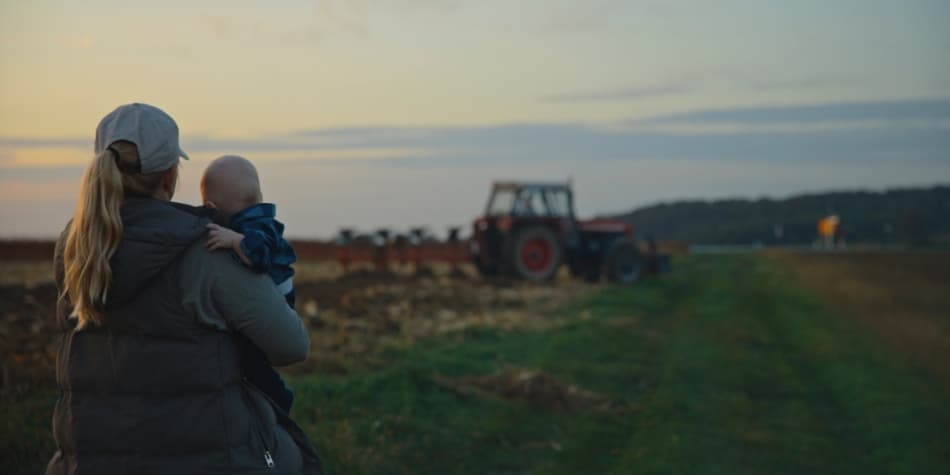
Investing off the farm can play an important role in protecting both the farm and your family’s long-term financial future. Diversifying some wealth beyond the farm can strengthen your overall financial position and help support the farm across generations.
Why investing off the farm makes sense
Farming sits at the heart of New Zealand’s economy, but it is also an inherently variable business. Each season brings a different mix of weather, global commodity prices, currency movements and regulatory change – many of which are outside your control. As a result, farm income can vary significantly from year to year.
From time to time, farmers may also face broader industry shocks, such as disease outbreaks or trade disruptions that can significantly impact production or profitability across the sector. Having part of your wealth invested outside the farm can help reduce the financial impact of these types of events by ensuring not all of your assets are tied to the same industry.
These sources of uncertainty can make planning challenging, whether you are looking to reinvest in the farm, support children through education, take time away from the business, or plan for retirement.
Investing some capital off the farm, for example in a diversified portfolio of shares, bonds and alternative assets, can help smooth this uncertainty by providing exposure to assets (and income) influenced by different economic factors. Over time, this can reduce reliance on farm income while also providing an additional source of long-term wealth creation alongside the farm.
It can also provide something farms generally cannot: ready access to capital. Listed investments such as shares can typically be sold within days if cash is needed, whereas accessing capital from the farm is often slower and more complex.
Succession planning and retirement flexibility
Another benefit of building wealth outside the farm is supporting succession planning.
Farms are valuable assets, but they can be difficult to divide fairly between family members, particularly where there is a need to provide for both farming and non-farming heirs.
You may find yourself in a situation where only one child wishes to continue farming while others have pursued different careers. In some families, several children may be involved in the farm, though ownership is not feasible for everyone, either due to the capital required or the farm not generating enough to support more than one livelihood. In other families, interest in farming may have skipped a generation.
Without other assets, this can create difficult decisions, particularly around fairly compensating non-farming heirs without selling part of the farm.
Off-farm investments give you flexibility. They allow one child to take over the farm while others receive different assets. This can also reduce the debt burden on the successor by limiting the need for borrowing to fund buyouts, while still supporting fairness across the family.
In this way, off-farm investments can help protect the farm itself, making it easier for it to remain within the family.
Off-farm wealth can also play an important role in retirement planning. While farms may represent substantial wealth, they are not always easy to convert into income without selling land or reducing the scale of operations. Investment portfolios can provide an additional source of income through dividends and capital growth, helping to support spending throughout retirement.
Importantly, this creates wealth that is independent of the value of the land. If agricultural conditions, land prices or the broader economy weaken at the time you are considering retirement, having assets outside the farm can provide greater financial flexibility and security.
It also provides a buffer for unexpected life events – often referred to as the “Ds”: death, disability, divorce, disagreement, debt, or dementia – helping protect both your farm and your wider family’s financial position.
Make the most of compounding
Unlike purchasing farmland, which typically requires significant capital, an off-farm investment portfolio can be built gradually from modest starting amounts. Over time, even irregular contributions can grow into a meaningful pool of wealth.
Starting early can also make a meaningful difference. A longer time horizon allows an off-farm investment portfolio to compound and build a more substantial base to support retirement spending.
Because farming income naturally varies over time, contributions to an off-farm portfolio may also be uneven. In practice, this may mean contributions are higher in stronger operating years and lower when conditions are more challenging. While reinvestment in the farm or reducing debt will often remain the priority, this pattern of investing can still build wealth steadily over time.
For example, investing $30,000 per year over 25 years and earning an average annual return of 7% would grow to approximately $1.9 million over time. Even if contributions are uneven the long-term impact of compounding can still be significant.
How compounding can build wealth over time

Balancing farm and off-farm wealth
Farms are productive, tangible and meaningful assets. For many families, they have been an extraordinary creator of wealth over generations.
However, relying entirely on one asset, in one industry, and often in one location can expose families to unnecessary concentration risk over time.
Alongside reducing this risk, investing outside your farm helps protect the long-term purchasing power of your wealth. Inflation gradually erodes the value of money over time, meaning the same dollar buys less in the future. Productive assets such as farmland and shares generate earnings that tend to grow over time, helping their value keep pace with rising prices.
Balancing farm assets with investments outside the farm therefore brings together a range of benefits – improving diversification, enhancing liquidity, providing additional income sources, and offering greater flexibility around succession and retirement planning.
Ultimately, investing beyond the farm is not about stepping away from farming. It is about strengthening the financial foundations that support the farm, providing greater flexibility, security and choice for both current and future generations.
Market Insights enewsletter
Keep up to date with our fortnightly Market Insights enewsletter. Our research team provide timely and regular commentary and analysis on market developments, understanding investment jargon, and the impact of current events.


Michelle Perkins
Director, Wealth Research
Market Insights enewsletter
Keep up to date with our fortnightly Market Insights enewsletter. Our research team provide timely and regular commentary and analysis on market developments, understanding investment jargon, and the impact of current events.